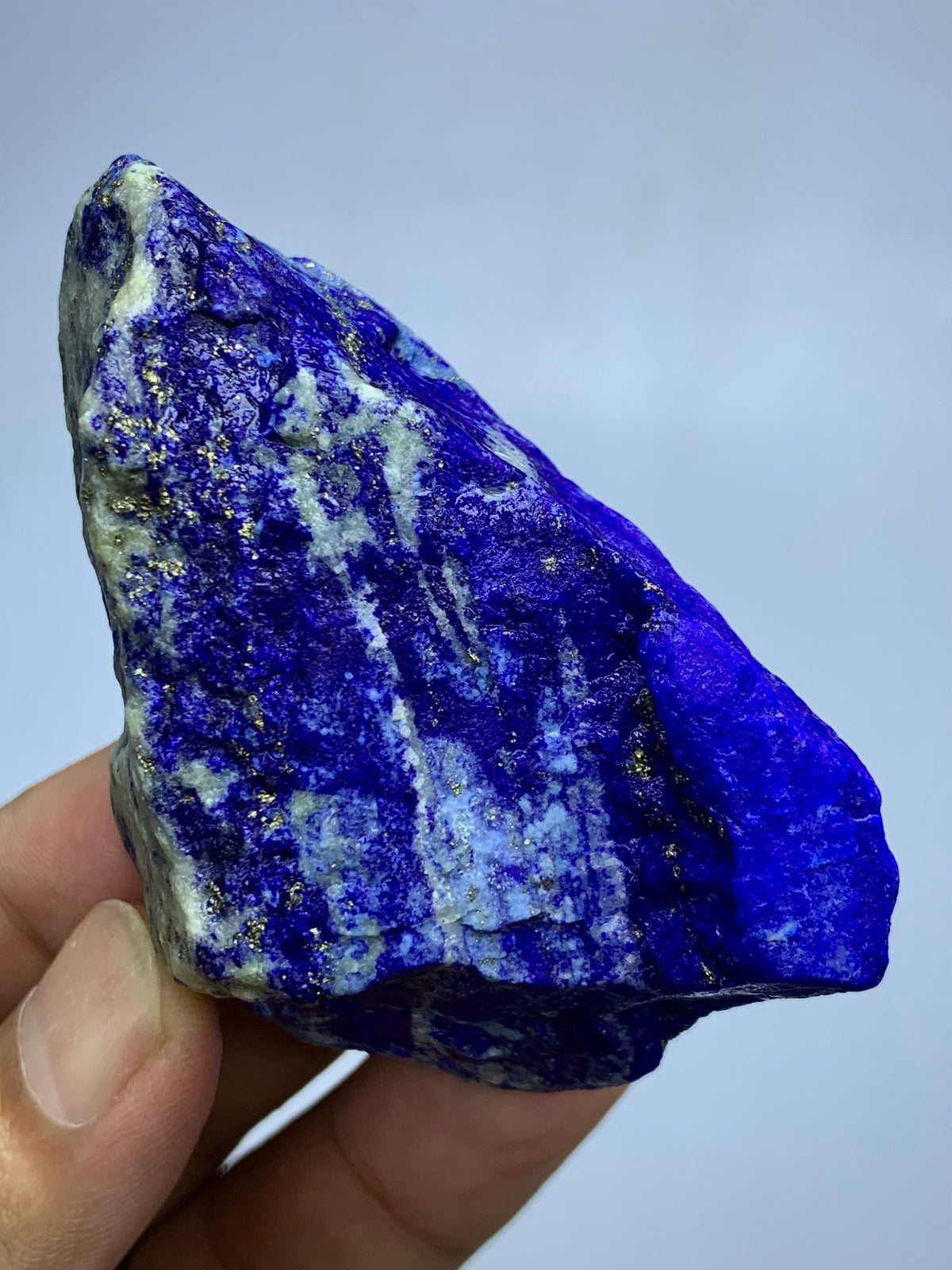
Lapis Lazuli Rough Specimen – Badakhshan, Afghanistan
Lapis Lazuli Rough Specimen – Badakhshan, Afghanistan
Couldn't load pickup availability
| Feature | Details |
|---|---|
| Mineral | Lapis Lazuli (Rough Specimen) |
| Weight | 141 Grams |
| Dimension | 7.6 x 6.0 x 3.8 cm |
| Colour | Royal Blue with Natural Pyrite & Calcite |
| Origin | Badakhshan, Afghanistan |
Lapis Lazuli Rough Specimen from Badakhshan, Afghanistan
This raw Lapis Lazuli specimen weighs 141 grams and comes from Badakhshan, Afghanistan, a mountainous region in the northeast of the country known as the source for genuine, unpolished Lapis Lazuli. The piece is offered in its natural state, with no lapidary work applied, so its raw texture and coloring are exactly as they formed underground.
Shape and Physical Form
Measuring 7.6 x 6.0 cm across with a 3.8 cm depth, this specimen has a balanced footprint paired with a notably thick, blocky profile relative to its compact width. That depth-to-width ratio gives it a solid, substantial feel in hand despite the moderate weight, which is worth knowing if you're comparing it to flatter or more elongated specimens.
Mineral Composition and Color
The core Lazurite matrix carries a deep, saturated indigo-to-ultramarine tone. Running through the raw surface are veins of metallic golden Pyrite and pathways of white Calcite, both of which occur naturally alongside Lazurite in genuine Badakhshan Lapis Lazuli. Nothing here has been treated, dyed, or enhanced.
Display and Lapidary Use
With its thick, balanced profile, this specimen suits a shelf or collector's cabinet where its depth can be appreciated up close. Its raw, uncut form also makes it usable as material for lapidary artists working with rough stone rather than finished, polished cuts.
Frequently Asked Questions
Is this Lapis Lazuli specimen natural and untreated?
Yes. This is a raw, unpolished specimen sold exactly as sourced, with no dyeing, heat treatment, or other alteration applied.
Where does this specimen come from?
It's sourced from Badakhshan, in the northeastern mountains of Afghanistan, historically the primary origin region for genuine Lapis Lazuli.
What other minerals are visible in this piece?
The raw surface shows metallic golden Pyrite and white Calcite, both of which naturally occur alongside Lazurite in Badakhshan Lapis Lazuli deposits.
Can this specimen be used for lapidary cutting?
Yes. Since it's unpolished and untreated, it works as raw material for lapidary artists in addition to being suitable as a standalone display specimen.
| Feature | Details |
|---|---|
| Mineral | Lapis Lazuli (Rough Specimen) |
| Weight | 141 Grams |
| Dimension | 7.6 x 6.0 x 3.8 cm |
| Colour | Royal Blue with Natural Pyrite & Calcite |
| Origin | Badakhshan, Afghanistan |