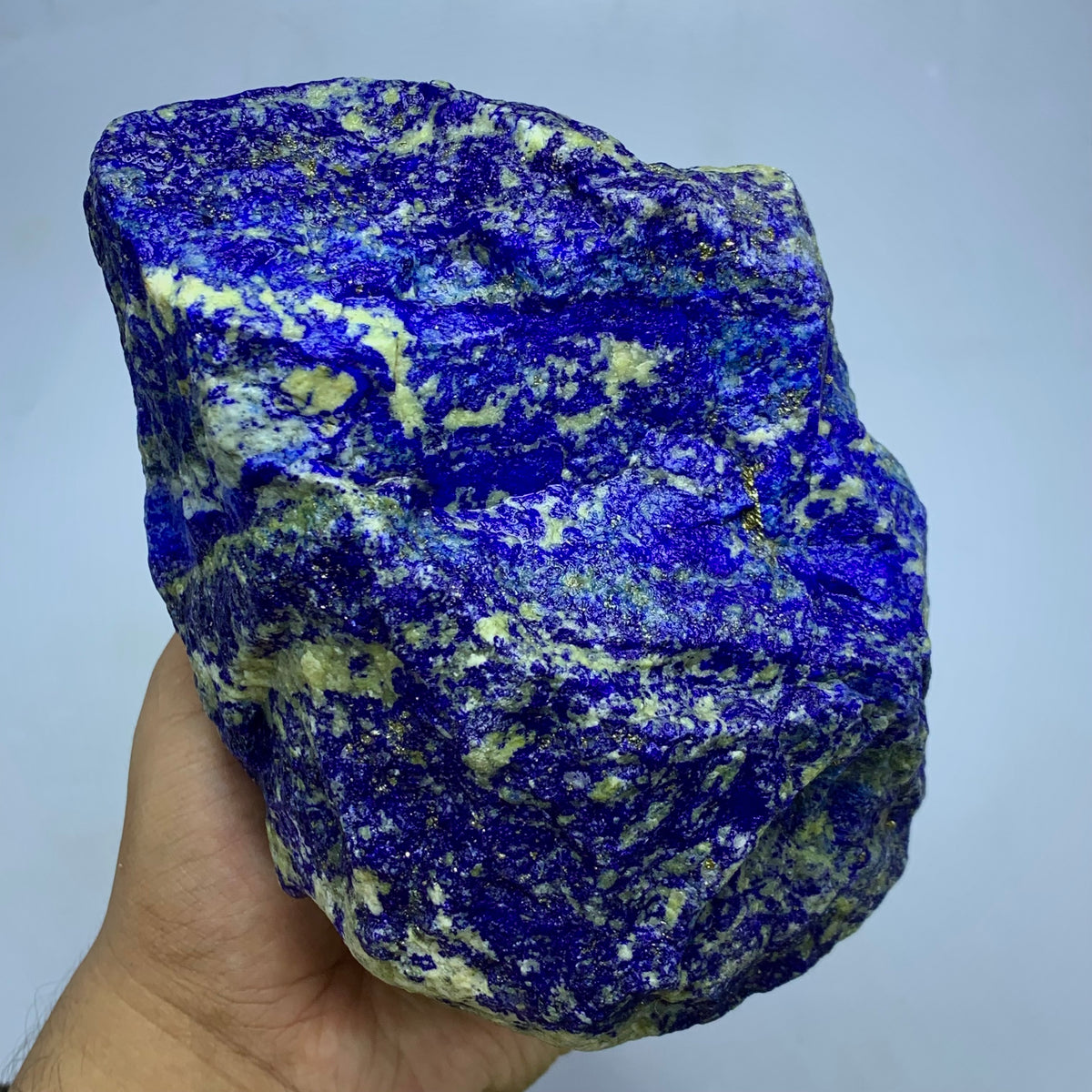
Lapis Lazuli Rough Cabinet Specimen, 2.9kg, Badakhshan, Afghanistan
Lapis Lazuli Rough Cabinet Specimen, 2.9kg, Badakhshan, Afghanistan
Couldn't load pickup availability
| Feature | Details |
|---|---|
| Mineral | Lapis Lazuli (Rough Specimen) |
| Weight | 2.9 kg |
| Dimension | 16.5 x 13.5 x 8.5 cm |
| Colour | Royal Blue with Natural Pyrite & Calcite |
| Origin | Badakhshan, Afghanistan |
A Museum Grade Lapis Lazuli Boulder From Badakhshan, Afghanistan
This lapis lazuli specimen weighs 2.9kg and comes from Badakhshan, Afghanistan, the source that has produced the world's finest lapis lazuli for over 6,000 years. Unlike polished pieces that have been cut and shaped, this specimen is left in its raw, unaltered state, showing the fine-grained lazurite matrix exactly as it formed underground, with a deep, saturated indigo to ultramarine core running through it.
Measuring 16.5 x 13.5 x 8.5 cm, the piece has genuine boulder-like presence and stands stable on its own without a mount or stand, so it's ready to place directly on a shelf or in a cabinet the moment it arrives. Across its textured surface, veins of golden pyrite and pathways of white calcite are exposed in their natural formation, giving it strong visual contrast that reads well from across a room, not just up close.
This combination of raw scale and natural mineral contrast is why unpolished specimens like this one are popular with collectors who display pieces rather than store them away. If you want to see how the piece looks from multiple angles before deciding, the full photo set above shows the specimen exactly as it will arrive, no similar piece pulled from stock.
Why Buy From Premier Fine Minerals
We source lapis lazuli and other specimens directly from Badakhshan, Afghanistan, without going through resellers that add markup. Every specimen is hand-selected for provenance, color saturation, and display quality before it's listed. What you see in the photos is the exact specimen you receive. Specimens ship with full locality documentation confirming origin.
For more pieces like this one, browse our full Lapis Lazuli collection and Rough Stone collection. To understand what makes Badakhshan lapis lazuli the benchmark for quality worldwide, and for guidance on displaying a raw specimen like this one at home, see our locality and collector guides (add links here once those blog posts are published).
FAQS
Is this lapis lazuli specimen treated or enhanced?
No. This specimen is completely natural and unpolished, with no dye, treatment, or enhancement. The color and mineral pattern are exactly as they formed underground in Badakhshan, Afghanistan.
Does this specimen need a stand to display it?
No. The specimen is stable on its own and stands as a centerpiece without additional mounting or support, so it's ready to display as soon as it arrives
What are the gold and white markings on the surface?
The gold flecks are natural pyrite and the white veining is calcite, both of which commonly form alongside lazurite in lapis lazuli deposits. They are part of the specimen's natural formation, not an added feature.
Is this piece suitable for lapidary cutting, or only for display?
Both. Its size and unpolished state make it suitable as a high-yield carving block for lapidary artists, while its natural form also works as a standalone display piece for collectors who prefer raw specimens.
Where does this lapis lazuli come from?
This specimen is sourced from Badakhshan, Afghanistan, home to the Sar-e-Sang mines, which have produced the world's most prized lapis lazuli for over 6,000 years.
| Feature | Details |
|---|---|
| Mineral | Lapis Lazuli (Rough Specimen) |
| Weight | 2.9 kg |
| Dimension | 16.5 x 13.5 x 8.5 cm |
| Colour | Royal Blue with Natural Pyrite & Calcite |
| Origin | Badakhshan, Afghanistan |